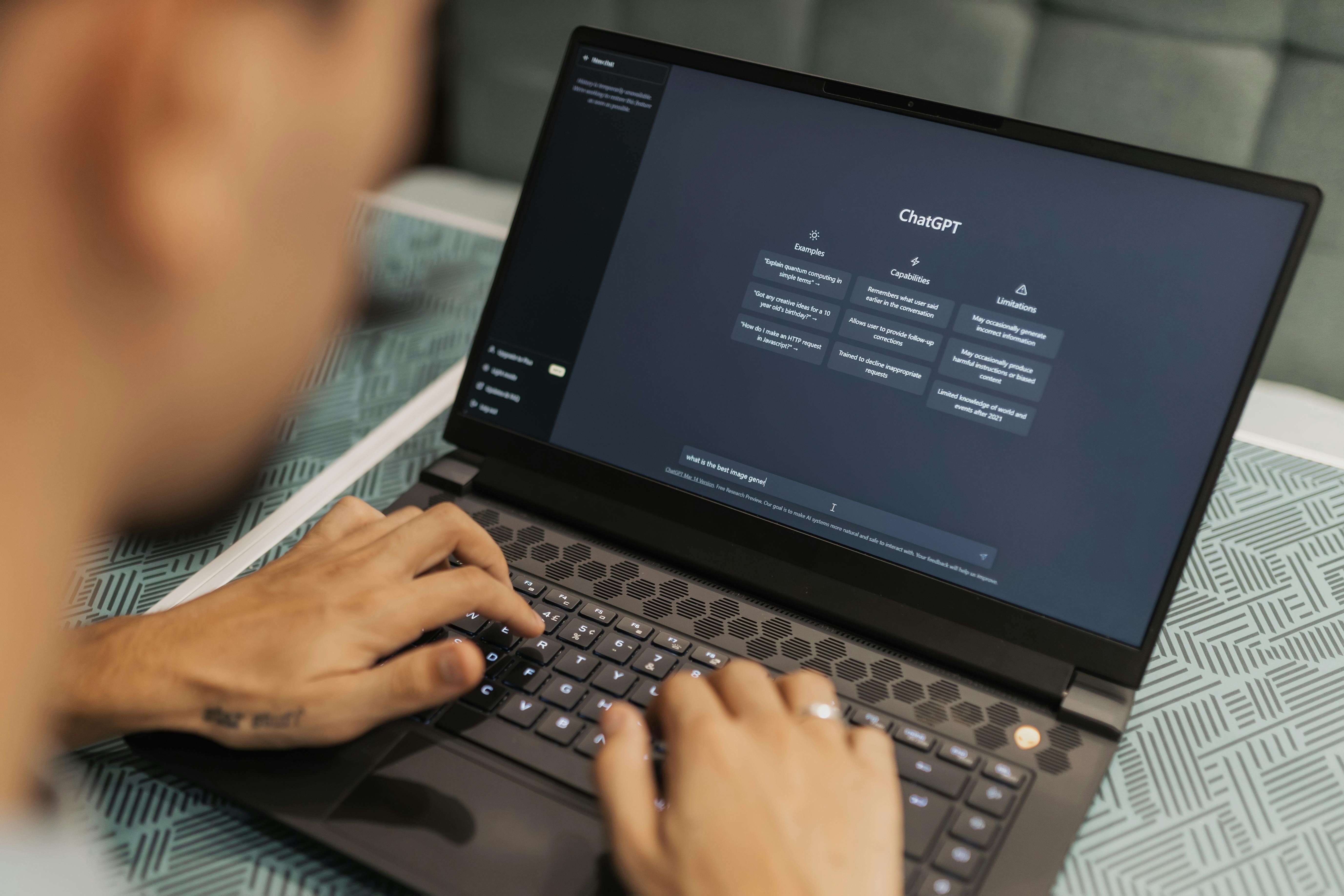
The ChatGPT solution has become a transformative artificial intelligence solution widely adopted by individuals and businesses alike seeking to improve their operations. Developed by OpenAI, this sophisticated artificial intelligence platform has been proven to be very effective in assisting users with drafting compelling emails, developing creative content, or conducting complex data analysis by streamlining a wide range of workflows.
OpenAI is continuously enhancing ChatGPT's capabilities through new integrations and advanced features that make it easier to integrate into the daily workflows of an organisation; however, an understanding of the platform's pricing models is vital for any organisation that aims to use it efficiently on a day-to-day basis.
A business or an entrepreneur in the United Kingdom that is considering ChatGPT's subscription options may find that managing international payments can be an additional challenge, especially when the exchange rate fluctuates or conversion fees are hidden.
In this context, the Wise Business multi-currency credit card offers a practical solution for maintaining financial control as well as maintaining cost transparency.
This payment tool, which provides companies with the ability to hold and spend in more than 40 currencies, enables them to settle subscription payments without incurring excessive currency conversion charges, which makes it easier for them to manage budgets as well as adopt cutting-edge technology.
A suite of premium features has been recently introduced by OpenAI that aims to enhance the ChatGPT experience for subscribers by enhancing its premium features.
There is now an option available to paid users to use advanced reasoning models that include O1 and O3, which allow users to make more sophisticated analytical and problem-solving decisions.
The subscription comes with more than just enhanced reasoning; it also includes an upgraded voice mode that makes conversational interactions more natural, as well as improved memory capabilities that allow the AI to retain context over the course of a long period of time.
It has also been enhanced with the addition of a powerful coding assistant designed to help developers automate workflows and speed up the software development process.
To expand the creative possibilities even further, OpenAI has adjusted token limits, which allow for greater amounts of input and output text and allow users to generate more images without interruption. In addition to expedited image generation via a priority queue, subscribers have the option of achieving faster turnaround times during high-demand periods.
In addition to maintaining full access to the latest models, paid accounts are also provided with consistent performance, as they are not forced to switch to less advanced models when server capacity gets strained-a limitation that free users may still have to deal with. While OpenAI has put in a lot of effort into enriching the paid version of the platform, the free users have not been left out.
GPT-4o has effectively replaced the older GPT-4 model, allowing complimentary accounts to take advantage of more capable technology without having to fall back to a fallback downgrade.
In addition to basic imaging tools, free users will also receive the same priority in generation queues as paid users, although they will also have access to basic imaging tools.
With its dedication to making AI broadly accessible, OpenAI has made additional features such as ChatGPT Search, integrated shopping assistance, and limited memory available free of charge, reflecting its commitment to making AI accessible to the public.
ChatGPT's free version continues to be a compelling option for people who utilise the software only sporadically-perhaps to write occasional emails, research occasionally, and create simple images.
In addition, individuals or organisations who frequently run into usage limits, such as waiting for long periods of time for token resettings, may find that upgrading to a paid plan is an extremely beneficial decision, as it unlocks uninterrupted access as well as advanced capabilities.
In order to transform ChatGPT into a more versatile and deeply integrated virtual assistant, OpenAI has introduced a new feature, called Connectors, which is designed to transform the platform into an even more seamless virtual assistant.
It has been enabled by this new feature for ChatGPT to seamlessly interface with a variety of external applications and data sources, allowing the AI to retrieve and synthesise information from external sources in real time while responding to user queries.
With the introduction of Connectors, the company is moving forward towards providing a more personal and contextually relevant experience for our users.
In the case of an upcoming family vacation, for example, ChatGPT can be instructed by users to scan their Gmail accounts in order to compile all correspondence regarding the trip. This allows users to streamline travel plans rather than having to go through emails manually.
With its level of integration, Gemini is similar to its rivals, which enjoy advantages from Google's ownership of a variety of popular services such as Gmail and Calendar.
As a result of Connectors, individuals and businesses will be able to redefine how they engage with AI tools in a new way. OpenAI intends to create a comprehensive digital assistant by giving ChatGPT secure access to personal or organisational data that is residing across multiple services, by creating an integrated digital assistant that anticipates needs, surfaces critical insights, streamlines decision-making processes, and provides insights.
There is an increased demand for highly customised and intelligent assistance, which is why other AI developers are likely to pursue similar integrations to remain competitive. The strategy behind Connectors is ultimately to position ChatGPT as a central hub for productivity — an artificial intelligence that is capable of understanding, organising, and acting upon every aspect of a user’s digital life.
In spite of the convenience and efficiency associated with this approach, it also illustrates the need to ensure that personal information remains protected while providing robust data security and transparency in order for users to take advantage of these powerful integrations as they become mainstream. In its official X (formerly Twitter) account, OpenAI has recently announced the availability of Connectors that can integrate with Google Drive, Dropbox, SharePoint, and Box as part of ChatGPT outside of the Deep Research environment.
As part of this expansion, users will be able to link their cloud storage accounts directly to ChatGPT, enabling the AI to retrieve and process their personal and professional data, enabling it to create responses on their own. As stated by OpenAI in their announcement, this functionality is "perfect for adding your own context to your ChatGPT during your daily work," highlighting the company's ambition of making ChatGPT more intelligent and contextually aware.
It is important to note, however, that access to these newly released Connectors is confined to specific subscriptions and geographical restrictions. A ChatGPT Pro subscription, which costs $200 per month, is exclusive to ChatGPT Pro subscribers only and is currently available worldwide, except for the European Economic Area (EEA), Switzerland and the United Kingdom.
Consequently, users whose plans are lower-tier, such as ChatGPT Plus subscribers paying $20 per month, or who live in Europe, cannot use these integrations at this time.
Typically, the staggered rollout of new technologies is a reflection of broader challenges associated with regulatory compliance within the EU, where stricter data protection regulations as well as artificial intelligence governance frameworks often delay their availability.
Deep Research remains relatively limited in terms of the Connectors available outside the company. However, Deep Research provides the same extensive integration support as Deep Research does.
In the ChatGPT Plus and Pro packages, users leveraging Deep Research capabilities can access a much broader array of integrations — for example, Outlook, Teams, Gmail, Google Drive, and Linear — but there are some restrictions on regions as well.
Additionally, organisations with Team plans, Enterprise plans, or Educational plans have access to additional Deep Research features, including SharePoint, Dropbox, and Box, which are available to them as part of their Deep Research features.
Additionally, OpenAI is now offering the Model Context Protocol (MCP), a framework which allows workspace administrators to create customised Connectors based on their needs.
By integrating ChatGPT with proprietary data systems, organizations can create secure, tailored integrations, enabling highly specialized use cases for internal workflows and knowledge management that are highly specialized.
With the increasing adoption of artificial intelligence solutions by companies, it is anticipated that the catalogue of Connectors will rapidly expand, offering users the option of incorporating external data sources into their conversations.
The dynamic nature of this market underscores that technology giants like Google have the advantage over their competitors, as their AI assistants, such as Gemini, can be seamlessly integrated throughout all of their services, including the search engine.
The OpenAI strategy, on the other hand, relies heavily on building a network of third-party integrations to create a similar assistant experience for its users.
It is now generally possible to access the new Connectors in the ChatGPT interface, although users will have to refresh their browsers or update the app in order to activate the new features.
As AI-powered productivity tools continue to become more widely adopted, the continued growth and refinement of these integrations will likely play a central role in defining the future of AI-powered productivity tools.
A strategic approach is recommended for organisations and professionals evaluating ChatGPT as generative AI capabilities continue to mature, as it will help them weigh the advantages and drawbacks of deeper integration against operational needs, budget limitations, and regulatory considerations that will likely affect their decisions.
As a result of the introduction of Connectors and the advanced subscription tiers, people are clearly on a trajectory toward more personalised and dynamic AI assistance, which is able to ingest and contextualise diverse data sources. As a result of this evolution, it is also becoming increasingly important to establish strong frameworks for data governance, to establish clear controls for access to the data, and to ensure adherence to privacy regulations.
If companies intend to stay competitive in an increasingly automated landscape by investing early in these capabilities, they can be in a better position to utilise the potential of AI and set clear policies that balance innovation with accountability by leveraging the efficiencies of AI in the process.
In the future, the organisations that are actively developing internal expertise, testing carefully selected integrations, and cultivating a culture of responsible AI usage will be the most prepared to fully realise the potential of artificial intelligence and to maintain a competitive edge for years to come.